years before the weekend
Driss Crosses the Sea
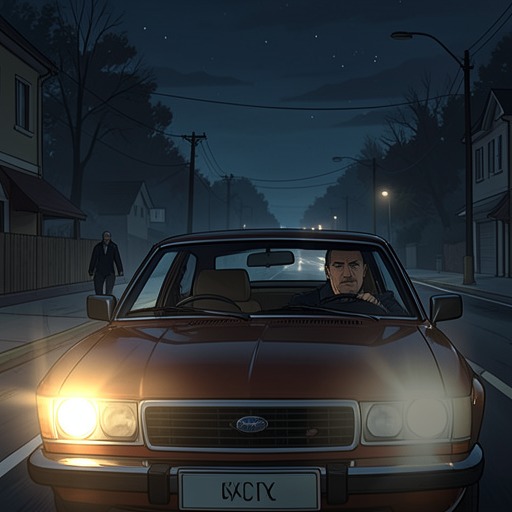
As a young man, [Driss](entity:character-recall-character-driss-f1b803433c36) leaves [Morocco](entity:location-recall-location-c725843469a0) in an illegal boat and reaches [Spain](entity:location-recall-location-0fe76f866976) near [Sotogrande](entity:location-recall-location-sotogrande-7b61586c22e1). He swims ashore without papers and walks through the marina, surprised by how easily he has crossed into the world he had imagined from afar.
At a gas station, he meets [Angela Bloodworth](entity:character-recall-character-angela-bloodworth-4a7d205bc7b6), an Englishwoman who offers him food and shelter. Her unexpected kindness becomes the first turn in a story shaped by Driss’s longing to escape poverty and his wary belief that outsiders can never be trusted.
the morning after Driss reaches Spain
Shelter at the Farmhouse
Angela brings [Driss](entity:character-recall-character-driss-f1b803433c36) to the farmhouse she shares with [Roger Bloodworth](entity:character-recall-character-roger-bloodworth-a013d734412e). After hearing that he is an undocumented migrant, the couple offer him work as their gardener, with room and board and a modest wage.
Driss accepts, though he suspects there may be a price hidden in their generosity. Their garden and careful household astonish him with their calmness, while his dependence on them deepens the conflict between gratitude and his determination to remain beholden to no one.
the following months
A Life in the Garden
[Driss](entity:character-recall-character-driss-f1b803433c36) works under Roger’s direction, learning the names and habits of the plants while the Bloodworths keep him discreetly away from guests who might notice his undocumented status. In the evenings, he eats with the couple and plays chess with Roger, gradually feeling affection for them despite his suspicion of their motives.
He also watches Roger handle the household’s cash and safe. The money becomes an imagined route to [Paris](entity:location-recall-location-657453741ed3), while the couple’s kindness increasingly feels to Driss like pity that denies his agency.
after several months in Spain
The Safe and the Knife
When Roger leaves for England to seek funds, [Driss](entity:character-recall-character-driss-f1b803433c36) tells Angela that he needs the money in the safe. She resists, but he drags her toward it and threatens her with a bread knife until she gives him the combination.
Driss takes the cash and, after briefly considering whether to kill Angela, murders her. He tells himself that survival and necessity justify the violence, a self-serving code that will shape his later choices as well.
soon after the robbery
The Failed Paris Escape
Carrying cash and clothes, [Driss](entity:character-recall-character-driss-f1b803433c36) returns to the gas station and persuades a Moroccan family heading north to take him toward [Paris](entity:location-recall-location-657453741ed3). He reaches the city, spends his money quickly, and fails to find even the basic work he had imagined would be waiting for him.
Paris becomes less a promised refuge than a place of loneliness, expense, and disappointment. After time among its migrant neighborhoods and streets, Driss turns back toward [Morocco](entity:location-recall-location-c725843469a0), carrying a story of Europe that mixes real hardship with the bravado he uses to impress [Ismael](entity:character-recall-character-ismael-e6600c6dddda).
after his return from Europe
Driss Returns to the Quarries
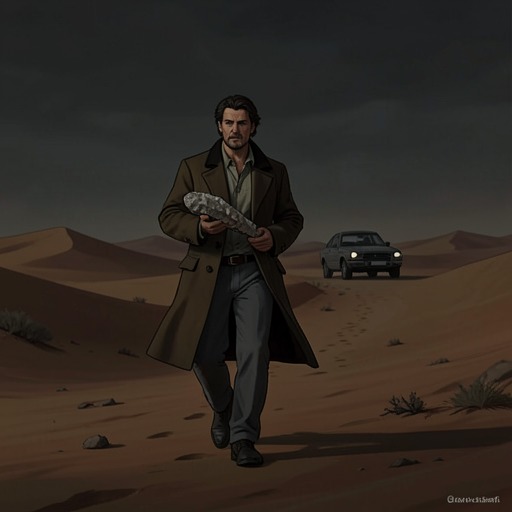
Back in the [Tafilalet](entity:location-recall-location-tafilalet-0f4dedb5c3c0), [Driss](entity:character-recall-character-driss-f1b803433c36) resumes work among the fossil yards and quarries, where he meets again with his younger friend [Ismael](entity:character-recall-character-ismael-e6600c6dddda). He describes his time abroad as proof that the world can be crossed, even as his return reveals that the promised escape has failed.
He tells Ismael that the young men of their region have little future beyond digging and preparing fossils for distant buyers. Their conversations kindle Ismael’s own desire to leave, while Driss starts to think of a way for them to raise money.
before the fatal drive
The Elvis Goes Missing
[Driss](entity:character-recall-character-driss-f1b803433c36) takes an unusually valuable fossil, known to dealers as the [Elvis fossil](entity:object-recall-object-elvis-fossil-75c7e26c77de), from his father’s stock. He hopes to sell it and use the proceeds to begin a life elsewhere, although he does not tell [Ismael](entity:character-recall-character-ismael-e6600c6dddda) the whole truth about his plans.
His father, [Abdellah Taheri](entity:character-recall-character-abdellah-taheri-fc85781c48af), understands the desperation behind the theft more than he admits. The fossil’s value to foreign collectors and its importance to the impoverished family make it both a possible escape and a symbol of the unequal trade on which the village depends.
the day before the collision
A Scheme on the Road
[Driss and Ismael](entity:relation-recall-relation-driss-and-ismael-7758221efa34) travel with fossils, hoping to sell them in [Midelt](entity:location-recall-location-7bff2343455c). Their journey is part of [Driss](entity:character-recall-character-driss-f1b803433c36)’s larger plan to make money and get away, though [Ismael](entity:character-recall-character-ismael-e6600c6dddda) does not know all of what the older boy has in mind.
Driss coaxes Ismael toward a more dangerous venture, telling him to put aside sentiment and act boldly. Their friendship begins to shade into conspiracy, with Ismael’s admiration making him more willing to follow Driss’s lead.
the Friday of the weekend, before the Hennigers arrive
The Hosts Prepare Azna
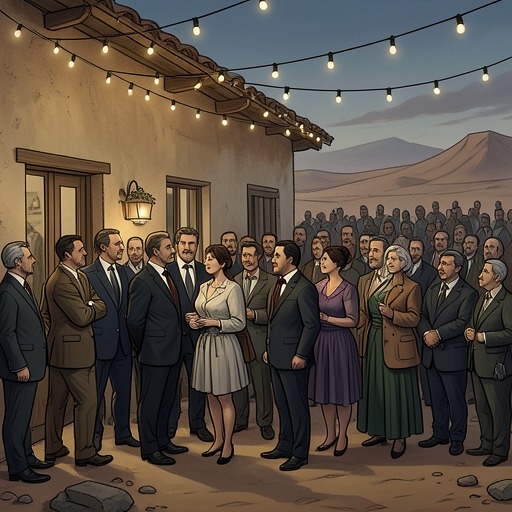
At [Azna](entity:location-recall-location-azna-50303ac064c1), [Richard Galloway and Dally Margolis](entity:relation-recall-relation-richard-galloway-and-6f0ffec0a136) prepare an extravagant weekend party in their renovated desert stronghold. Staff string lights, ready elaborate food and drinks, and receive a stream of wealthy international guests drawn by the promise of spectacle and escape.
The resort-like abundance sits beside the ruined village and the precarious lives of the local workers. [Hamid](entity:character-recall-character-hamid-1ce111aa1530) oversees the operation, keeping the house running as the hosts’ guests turn the remote setting into a stage for their own indulgence.
Friday evening
Tom Day Arrives
[Tom Day](entity:character-recall-character-tom-day-867fed6925f0) arrives at the party and watches the preparations from the edges, amused by the display but detached from its social rituals. He moves through the illuminated compound, meets [Richard Galloway](entity:character-recall-character-richard-galloway-4b375cd2870b), and learns that the hosts are still expecting their English friends.
As the evening gathers force, Tom Day observes the wealthy guests, the Moroccan staff, and the performance of cultivated exoticism around them. His outsider’s perspective will later draw him toward [Jo Henniger](entity:character-recall-character-jo-henniger-4cb861f05dfc), who is herself stranded between the party and the crisis that follows.
Friday, before midnight
The Hennigers Cross Morocco
[David Henniger and Jo Henniger](entity:relation-recall-relation-david-henniger-and-j-d5ae939e8a17) arrive in [Morocco](entity:location-recall-location-c725843469a0) by ferry and begin a long drive inland in a worn [Toyota Camry](entity:object-recall-object-toyota-camry-fd4643264ddb). At [Chefchaouen](entity:location-recall-location-4d668c794ffe), David drinks despite Jo’s concern that he still has hours of driving ahead, and their familiar argument exposes the strain in their marriage.
They continue through the mountains and desert roads after dark, increasingly tired and uncertain of the route. David’s drinking, impatience, and desire to press on turn a difficult journey into a dangerous one.
Friday night, as the Hennigers drive inland
The Party Awaits
At [Ksour Azna](entity:location-recall-location-ksour-azna-8c48161c170f), dinner and entertainment continue while [Richard Galloway](entity:character-recall-character-richard-galloway-4b375cd2870b) waits for [David Henniger and Jo Henniger](entity:relation-recall-relation-david-henniger-and-j-d5ae939e8a17). [Tom Day](entity:character-recall-character-tom-day-867fed6925f0) hears that the missing couple have been arguing on the road, and the guests settle into the elaborate meal without them.
The empty place cards become a quiet sign of how easily the party absorbs people into its spectacle. Outside, the desert road remains dark, and the Hennigers are still searching for the turn toward the estate.
late Friday night
The Roadside Collision
Near the turn for [Azna](entity:location-recall-location-azna-50303ac064c1), [Driss and Ismael](entity:relation-recall-relation-driss-and-ismael-7758221efa34) wait beside the road with fossils, hoping to stop passing cars. They intend to exploit the visitors’ wealth, and [Driss](entity:character-recall-character-driss-f1b803433c36) has urged [Ismael](entity:character-recall-character-ismael-e6600c6dddda) not to hesitate when a vehicle approaches.
[David Henniger](entity:character-recall-character-david-henniger-300ff2310fd5), tired and impaired, drives on through the darkness as [Jo Henniger](entity:character-recall-character-jo-henniger-4cb861f05dfc) tells him to stop. The [Toyota Camry](entity:object-recall-object-toyota-camry-fd4643264ddb) strikes Driss, killing him; Ismael runs into the hills, while the collision shatters the Hennigers’ confidence that they can control what happens next.
moments after the collision
David Removes the Identity Card
After the car stops, David and Jo argue over what to do. David searches [Driss](entity:character-recall-character-driss-f1b803433c36)’s pockets and removes his identity papers, then buries them rather than leave them with the body.
The choice transforms an accident into a deliberate concealment. David and Jo carry Driss’s body in their car toward [Azna](entity:location-recall-location-azna-50303ac064c1), and the secret of the missing identification will later become central to [Abdellah Taheri](entity:character-recall-character-abdellah-taheri-fc85781c48af)’s questions.
around one in the morning
The Body Reaches Azna
The Hennigers arrive at [Ksour Azna](entity:location-recall-location-ksour-azna-8c48161c170f) with [Driss](entity:character-recall-character-driss-f1b803433c36)’s body sprawled in the back of the car. [Richard Galloway and Hamid](entity:relation-recall-relation-richard-galloway-and-ea9936f14e47) discover the corpse, and [Richard](entity:character-recall-character-richard-cc7ee1eeaeeb) calls the local police while trying to keep the party from erupting into panic.
Richard recognizes the scale of the problem: the dead young man has no identification, and the Hennigers’ account may not be complete. The staff gather around the body, disturbed by the death and by the apparent ease with which the wealthy visitors have brought it into their guarded compound.
shortly after the arrival
Richard Questions David
[Richard Galloway](entity:character-recall-character-richard-galloway-4b375cd2870b) speaks privately with [David Henniger](entity:character-recall-character-david-henniger-300ff2310fd5) and asks for a full account before the police arrive. David says that a fossil seller stepped into the road and claims the couple feared a carjacking; Jo confirms only that they hit the man.
[Richard](entity:character-recall-character-richard-cc7ee1eeaeeb) suspects David has been drinking and recognizes that the story is being shaped to protect him. Still, he reassures the couple that cooperation and contrition may keep the case from becoming more serious, revealing how quickly privilege turns a death into a matter of managing consequences.
later that night, during dinner
Jo Reveals the Collision
At the dinner table, guests ask the Hennigers about their delay. David gives a vague account of getting lost, but Jo abruptly tells the room that they hit and killed a Moroccan man.
Her disclosure stops the conversation and punctures the party’s practiced indifference. David insists it was an accident, while Jo’s laughter and distress show that she can no longer bear the performance of pretending nothing has happened.
after midnight
Police Record an Accident
Captain [Yassine Benihadd](entity:character-recall-character-yassine-benihadd-1f0a5d535696) questions [David Henniger](entity:character-recall-character-david-henniger-300ff2310fd5) about the collision and asks whether there was more than one person on the road. David says there was only one and repeats that the death was accidental.
The [Moroccan Police](entity:organization-recall-organization-b3f4096acc55) record the death as an accident and leave the body at [Azna](entity:location-recall-location-azna-50303ac064c1) until arrangements can be made. Jo feels relief at the quick resolution but also understands that the official outcome has not settled the moral question between the living and the dead.
the rest of the night
A Night of Uneasy Vigil
The Hennigers return to their room while [Driss](entity:character-recall-character-driss-f1b803433c36)’s body remains in a garage under vigil. The staff whisper that the foreigners must have reversed over him and treated him like a fly, though none of them knows exactly what occurred.
Jo lies awake under the storm winds, while David sleeps after insisting that the matter is over. The staff’s anger and the dead man’s namelessness make clear that the police’s decision has not resolved the community’s sense of injustice.
Saturday afternoon
Driss’s Father Reaches Azna
[Abdellah Taheri](entity:character-recall-character-abdellah-taheri-fc85781c48af) arrives at the gates of [Ksour Azna](entity:location-recall-location-ksour-azna-8c48161c170f) with several men after traveling from [Tafal’aalt](entity:location-recall-location-tafal-aalt-66f455c0ceae). He asks to collect his son, and [Hamid](entity:character-recall-character-hamid-1ce111aa1530) learns the dead boy’s name at last: [Driss](entity:character-recall-character-driss-f1b803433c36).
The father approaches his son’s body with a grief so contained that it unsettles everyone watching. The staff’s anger intensifies as they see [Abdellah](entity:character-recall-character-abdellah-785c60ce3e00) face the death while the people responsible remain inside the party’s protected world.
Saturday afternoon, after Abdellah identifies Driss
The Father Requests Atonement
[Abdellah](entity:character-recall-character-abdellah-785c60ce3e00) speaks with [Hamid](entity:character-recall-character-hamid-1ce111aa1530) and asks that [David Henniger](entity:character-recall-character-david-henniger-300ff2310fd5) accompany [Driss](entity:character-recall-character-driss-f1b803433c36)’s body back to [Tafal’aalt](entity:location-recall-location-tafal-aalt-66f455c0ceae) for burial. He frames the request as a proper act for the man responsible for his son’s death, not as a demand for immediate payment.
[Richard Galloway](entity:character-recall-character-richard-galloway-4b375cd2870b) and David are unsettled by the request, which leaves the amount and meaning of any compensation unstated. David fears a trap but also sees the journey as a chance to be forgiven by the one person whose judgment matters most.
Saturday evening
David Agrees to Go
[Richard Galloway](entity:character-recall-character-richard-galloway-4b375cd2870b) urges [David Henniger](entity:character-recall-character-david-henniger-300ff2310fd5) to meet [Abdellah](entity:character-recall-character-abdellah-785c60ce3e00) and accept the journey, arguing that refusal would make the situation worse. David objects to what he calls blackmail, but eventually agrees to travel with the family and bring the money he has.
[Jo Henniger](entity:character-recall-character-jo-henniger-4cb861f05dfc) says she will go too, but Abdellah’s rule excludes women from accompanying them. She packs David’s belongings, and the couple part with a mixture of fear, affection, and relief that neither can fully explain.
Saturday night
The Party Continues Without Jo
After David leaves, [Richard Galloway](entity:character-recall-character-richard-galloway-4b375cd2870b) draws Jo into the party, encouraging her to drink and stop waiting alone for news. The guests dance, take drugs, and move through the ornate rooms while the staff continue serving them.
Jo’s anxiety about David coexists with a long-buried hunger for attention and freedom. [Tom Day](entity:character-recall-character-tom-day-867fed6925f0) becomes a familiar presence in the crowd, and the distance between her marriage and the party’s permission to forget begins to narrow.
Saturday night into Sunday
The Journey to Erfoud
[Abdellah](entity:character-recall-character-abdellah-785c60ce3e00)’s party drives through [Errachidia](entity:location-recall-location-errachidia-3d86cc07fab9) and onward toward [Erfoud](entity:location-recall-location-erfoud-bcdd82f5f208) with David among them and [Driss](entity:character-recall-character-driss-f1b803433c36)’s body in the vehicle. [Anouar](entity:character-recall-character-anouar-9fcb16f6ccae) explains that they will stop at the Hotel [Tafilalet](entity:location-recall-location-tafilalet-0f4dedb5c3c0) before continuing in daylight.
David feels increasingly isolated among men whose names and intentions he does not know. At the hotel, the fossil dealers’ trade surrounds him, making the local economy visible as a chain in which poor diggers supply objects prized by distant buyers.
Sunday morning
The Long Crossing to Tafal’aalt
The group leaves [Erfoud](entity:location-recall-location-erfoud-bcdd82f5f208) and passes fossil workers and the quarry country around [Hmor Lagdad](entity:location-recall-location-hmor-lagdad-5583d347b34a). [Abdellah](entity:character-recall-character-abdellah-785c60ce3e00) keeps David apart from the others, telling him through [Anouar](entity:character-recall-character-anouar-9fcb16f6ccae) that their food, cups, and shadows must not touch.
They travel by a rough route around the [Jbel Issomour massif](entity:location-recall-location-jbel-issomour-57fd353919a7), crossing the barren plateau and several impoverished settlements. David sees the scale of the landscape and the fossil labor that sustains the villages, but his fear keeps turning every unfamiliar custom into a possible threat.
Sunday afternoon
Driss Comes Home
At [Tafal’aalt](entity:location-recall-location-tafal-aalt-66f455c0ceae), [Driss](entity:character-recall-character-driss-f1b803433c36)’s family begins its mourning as his body is carried into the house. Women lament, and [Abdellah](entity:character-recall-character-abdellah-785c60ce3e00) directs David to Driss’s small room, where fossils, a mattress, and a few personal effects remain.
David is made to sleep in the dead man’s room, an arrangement Abdellah considers fitting. The intimate evidence of Driss’s life makes the death harder for David to reduce to an accident or a legal problem.
Sunday afternoon
Driss’s Funeral
[Driss](entity:character-recall-character-driss-f1b803433c36) is buried in the village cemetery as wind sweeps across the graves. [Abdellah](entity:character-recall-character-abdellah-785c60ce3e00) remembers his son as a boy at the quarries, while the family and villagers mourn the young man whose life had been tied to fossil work and the hope of escape.
David remains in the house and does not take part in the burial. The funeral deepens the separation between the two men: one bears the irreversible loss, while the other waits to learn whether he will be judged, forgiven, or punished.
Sunday night
Abdellah Questions Ismael
After the burial, [Abdellah](entity:character-recall-character-abdellah-785c60ce3e00) meets [Ismael](entity:character-recall-character-ismael-e6600c6dddda) in secret and asks him what happened on the road. Ismael admits that he and [Driss](entity:character-recall-character-driss-f1b803433c36) were waiting for cars, hoping to sell fossils or take advantage of wealthy travelers, and that he fled when the Hennigers’ car struck Driss.
Ismael also says he saw David search Driss’s body and remove his identification. Abdellah strikes Ismael and demands his future loyalty, but the boy’s account gives him the first clear evidence that David has concealed part of the truth.
Sunday night, after the funeral
David Lies to Abdellah
[Abdellah](entity:character-recall-character-abdellah-785c60ce3e00) visits David alone, bringing apples and the [SOG knife](entity:object-recall-object-sog-9941f81eb852) he used to peel them. He speaks about the [Elvis fossil](entity:object-recall-object-elvis-fossil-75c7e26c77de) [Driss](entity:character-recall-character-driss-f1b803433c36) had taken and explains that his son’s attempt to sell it had been an effort to escape a grinding life.
When Abdellah asks whether Driss was alone on the road, David says that he was. He has already learned from [Ismael](entity:character-recall-character-ismael-e6600c6dddda)’s account that the answer is false, and Abdellah’s central test is now whether David will tell the truth about the night his son died.
early Monday morning
A Walk Before Dawn
Unable to sleep, David slips out of [Driss](entity:character-recall-character-driss-f1b803433c36)’s room and walks toward the dry riverbed. A quarry worker finds him and shows him fossilized sea creatures in the rock, offering to cut one out for him.
The encounter briefly draws David away from fear and toward the deep time embodied in the fossils. [Abdellah](entity:character-recall-character-abdellah-785c60ce3e00) arrives in his jeep, and David realizes that the family has not simply left him alone, even though Abdellah had said he could walk freely.
at first light on Monday
Abdellah Spares David
[Abdellah](entity:character-recall-character-abdellah-785c60ce3e00) confronts David with the [SOG knife](entity:object-recall-object-sog-9941f81eb852) but does not attack him. He orders [Anouar](entity:character-recall-character-anouar-9fcb16f6ccae) to take David back to [Azna](entity:location-recall-location-azna-50303ac064c1), ending the journey without payment demanded or punishment inflicted.
The restraint is not simple absolution. Abdellah is still consumed by grief and later regrets not killing David, but in that moment he chooses to control the violence within him and let the stranger go.
Saturday night into Sunday morning
Jo’s First Night Alone
While David is away, Jo spends the night at [Azna](entity:location-recall-location-azna-50303ac064c1) drinking and moving through the party without him. She swims alone in the pool, remembers her stalled writing life, and feels a temporary release from the role she has occupied in her marriage.
Her solitude becomes a turning point: she recognizes that she can experience desire and pleasure beyond David’s orbit. The freedom does not resolve her guilt or unhappiness, but it gives her a glimpse of a different possible life.
Sunday morning
Jo Meets Tom Day
[Tom Day](entity:character-recall-character-tom-day-867fed6925f0) sends Jo a playful invitation to coffee after the previous night’s party. She goes to his cottage, where he flirts with her and invites her to a picnic at the [Hadda waterfall](entity:location-recall-location-fcaf8528a834).
Jo accepts, drawn by his attention and by the chance to be someone other than the anxious wife waiting for David. Tom Day recognizes her vulnerability but also finds himself more genuinely interested in her than he expected.
Sunday afternoon
The Waterfall Picnic
At the [Hadda waterfall](entity:location-recall-location-fcaf8528a834), Jo swims with [Tom Day](entity:character-recall-character-tom-day-867fed6925f0) and gradually leaves the party behind. Their flirtation becomes physical as they move through the connected pools and palm groves, while the Moroccan women nearby fall quiet at the sight of the visitors’ display.
Jo gives in to the attraction, not because she has resolved her marriage but because she wants to feel present and desired. The encounter marks a decisive breach in her long fidelity to David.
Monday morning
David Returns to Azna
[Anouar](entity:character-recall-character-anouar-9fcb16f6ccae) drives David back toward [Azna](entity:location-recall-location-azna-50303ac064c1) after [Abdellah](entity:character-recall-character-abdellah-785c60ce3e00) releases him. On the way, David asks whether Abdellah forgave him; Anouar believes he did, since David has been allowed to leave.
David gives Anouar the two thousand euros he had carried for the family, telling him not to open the bag until he returns to his own village. The gift is David’s attempt to make the journey mean something beyond his fear and relief.
Monday, near midday
The Hennigers Reunite
Jo waits by the road and greets David when [Anouar](entity:character-recall-character-anouar-9fcb16f6ccae) brings him back. She offers wine and hears that [Abdellah](entity:character-recall-character-abdellah-785c60ce3e00) did not demand money, though David gave the cash to Anouar instead.
David and Jo sense that they have each been changed by the weekend, and that something has happened between them that neither can easily name. They agree that they can go home, but the word no longer carries its old certainty.
Monday morning, after the reunion
Jo Confesses the Drinking
In a private conversation with [Richard Galloway](entity:character-recall-character-richard-galloway-4b375cd2870b), Jo admits that David had been drinking before the collision and that they were both responsible for what happened. She says that [Driss](entity:character-recall-character-driss-f1b803433c36) had done nothing wrong beyond stepping into the road to make them slow down.
[Richard](entity:character-recall-character-richard-cc7ee1eeaeeb) tells her that he had already guessed the truth. Jo’s confession gives her a brief release from secrecy, but it cannot undo David’s earlier lie to [Abdellah](entity:character-recall-character-abdellah-785c60ce3e00) or restore the life she had before the accident.
Monday morning, before David returns
Jo Names Her New Freedom
After the affair, Jo tells [Richard Galloway](entity:character-recall-character-richard-galloway-4b375cd2870b) that the weekend has changed her and that she may eventually leave David. She describes feeling newly alive, while acknowledging that the experience grew from grief, intoxication, and the marriage’s long decline.
[Richard](entity:character-recall-character-richard-cc7ee1eeaeeb) does not tell her what to do. Jo understands that she no longer needs to be forgiven by someone else in order to imagine a future, even though the consequences of her choices are still ahead.
Monday afternoon
The Party Winds Down
As the guests leave [Azna](entity:location-recall-location-azna-50303ac064c1), David and Jo remain apart from the cheerful farewells. [Richard Galloway and Dally Margolis](entity:relation-recall-relation-richard-galloway-and-6f0ffec0a136) discuss the accident and the inconvenience it brought to their carefully staged weekend, while the staff clear the compound.
Jo waits by the pool, unsettled by her affair and unsure what she will say to David. The party’s indifference makes the couple’s isolation visible: the guests can leave the desert behind, but the Hennigers must carry the consequences home.
Monday evening
The Hennigers Choose the Night Road
[Richard Galloway](entity:character-recall-character-richard-galloway-4b375cd2870b) urges David and Jo to stay another night and avoid repeating their dangerous drive. David insists that they want to leave immediately and return to [Tangier](entity:location-recall-location-13b1ab7db6c4), while Jo says that the country now feels tied to their misfortune.
[Richard](entity:character-recall-character-richard-cc7ee1eeaeeb) gives them a map and a picnic hamper, including nonalcoholic cider. Their decision to drive at night echoes the journey that brought them to [Azna](entity:location-recall-location-azna-50303ac064c1), as if speed and departure might put the weekend beyond reach.
Monday night, on the road away from Azna
The Second Roadside Encounter
As they approach the place where [Driss](entity:character-recall-character-driss-f1b803433c36) was killed, Jo asks David to stop and pay their respects. David slows the car, accepting the request instead of brushing it aside as he might have done before.
[Ismael](entity:character-recall-character-ismael-e6600c6dddda) comes down from the hillside carrying a [Psychopyge](entity:creature-recall-creature-psychopyge-ae51052ed3e8) fossil and calls for them to stop. He has waited there for hours, armed with a pistol [Abdellah](entity:character-recall-character-abdellah-785c60ce3e00) gave him, and the couple do not yet understand that the surviving witness to the first collision has returned to the road.
the final moments
Ismael Kills David
[Ismael](entity:character-recall-character-ismael-e6600c6dddda) approaches the stopped car, remembering that David removed [Driss](entity:character-recall-character-driss-f1b803433c36)’s identification. He raises the pistol and shoots David before the couple can respond.
David realizes that he is being killed and feels a final surge of regret for having lied to [Abdellah](entity:character-recall-character-abdellah-785c60ce3e00). He tries to communicate that he is sorry, but has no time to speak; the novel ends with his death and the unresolved cost of the truths he concealed.